
The Difference: Chemical vs. Physical Exfoliation
12/21/20252 min read
Introduction to Exfoliation
Exfoliation is a crucial part of any skincare routine. It helps remove dead skin cells, revealing smoother and brighter skin underneath. However, not all exfoliation is created equal. The two main types are chemical and physical exfoliation, each with unique benefits tailored to different skin types. In this blog post, we’ll explore the differences between the two methods and provide an esthetician's perspective on which might be best for you.
Chemical Exfoliation: A Deeper Clean
Chemical exfoliation uses acids or enzymes to dissolve dead skin cells and debris. Common ingredients include alpha hydroxy acids (AHAs) like glycolic acid and beta hydroxy acids (BHAs) like salicylic acid. These chemicals penetrate the skin more deeply than physical exfoliants, making them particularly effective for those battling issues like acne, hyperpigmentation, or visible signs of aging.
From an esthetician's point of view, chemical exfoliation can be more beneficial for sensitive skin or conditions like rosacea due to its gentler nature. It’s also great for oily or acne-prone skin, as BHAs help to unclog pores. However, it's essential to start with lower concentrations to assess skin tolerance and avoid over-exfoliation.
Physical Exfoliation: The Traditional Approach
On the other hand, physical exfoliation involves mechanically scrubbing the skin to remove dead skin cells. This can be done with scrubs that contain granules or tools like brushes or cloths. While physical exfoliation can provide immediate results in terms of smoothness and radiance, it’s not always suitable for everyone. People with sensitive or inflamed skin may find that physical exfoliants cause irritation.
Examples of physical exfoliants include sugar scrubs, walnut shell scrubs, and exfoliating brushes. Estheticians often recommend physical exfoliation for normal to oily skin types who can handle a bit of abrasion. For individuals with resilient skin, this method can enhance skin texture and promote blood circulation.
Choosing the Right Method for Your Skin Type
Ultimately, the choice between chemical and physical exfoliation depends on your skin type and personal preferences. If you have oily or acne-prone skin, chemical exfoliation might be the way to go for its deep pore-clearing effects. For those with dry or mature skin, gentle AHAs can provide moisture alongside exfoliation.
Conversely, if you enjoy the tactile experience of scrubbing your skin and have normal to combination skin, you might prefer physical exfoliation. Regardless of the method, consistency is key. Always follow up with a good moisturizer and sunscreen to protect your skin after exfoliation.
Consulting with a licensed esthetician can also help you determine the best formulation and frequency for your skin's needs, ensuring you enjoy all the benefits of exfoliation while minimizing the risks.
Free Download
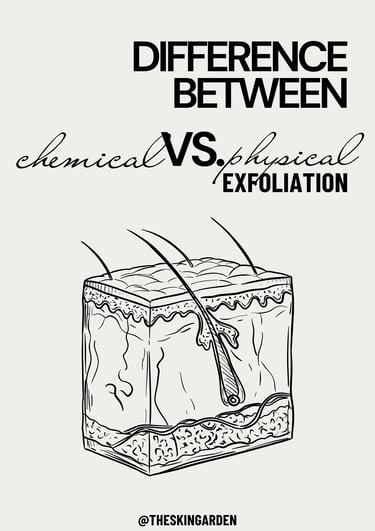
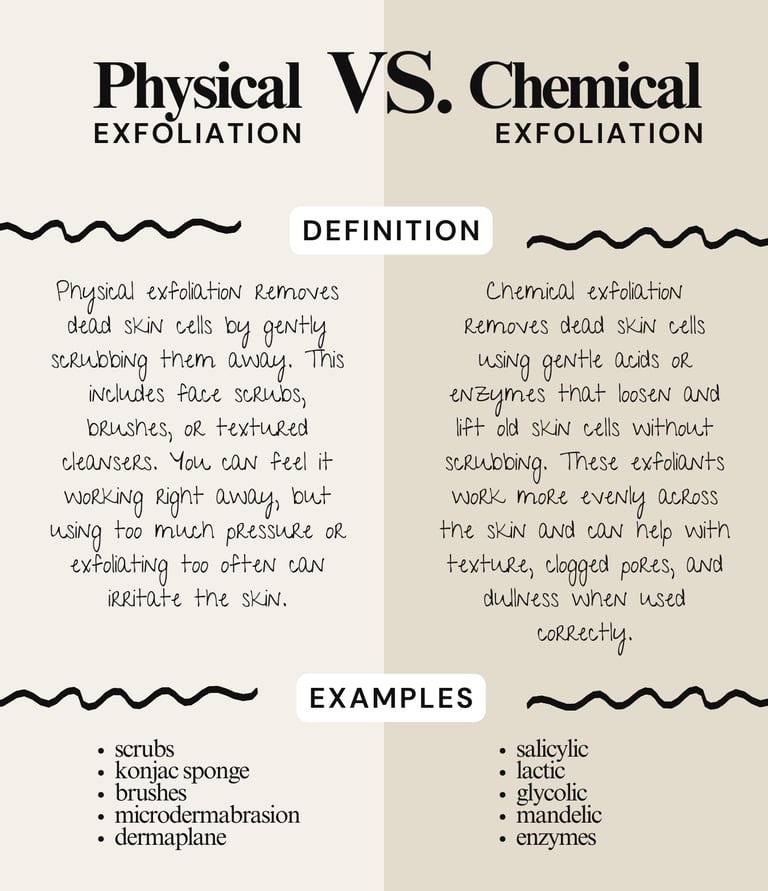
The difference between physical and chemical exfoliation digital downloads. Perfect to post on social media to educate clients.